

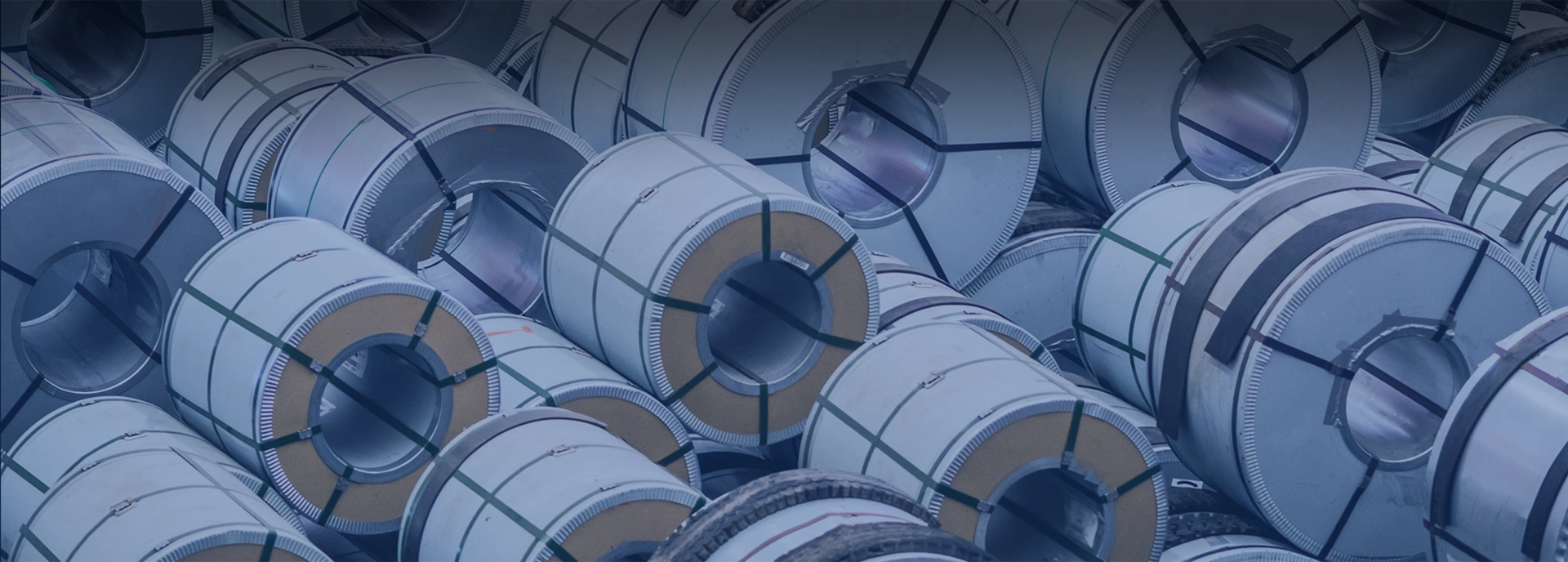
The construction plan for corrugated pipe culverts can follow the following process: Installation and Material Preparation: Prepare the required construction equipment such as excavators, cranes, pile drivers, and welding installation tools, as well as corrugated culvert pipes and other related materials.
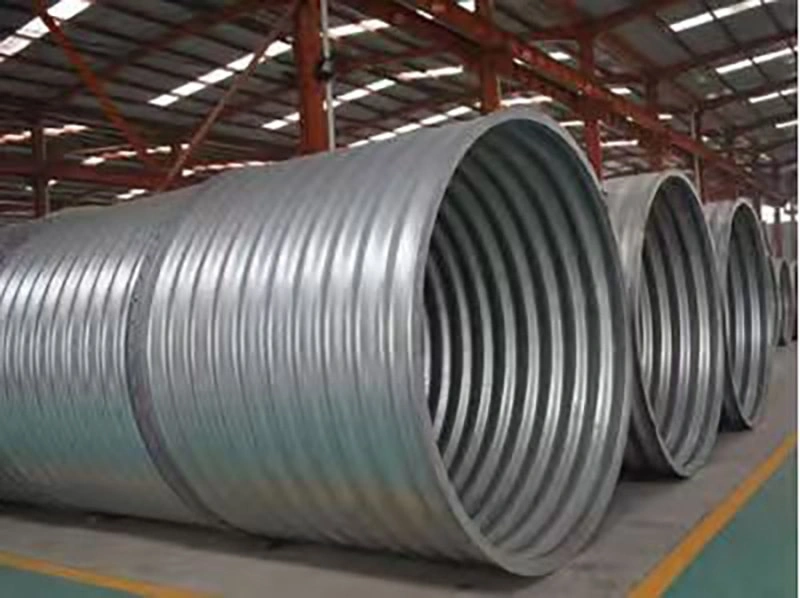
Environmental Preparation: Clear the construction area, ensuring the site is level and free of obstacles. Additionally, implement road edge protection measures to prevent objects such as stones from rolling off and causing injuries.
Foundation Treatment: According to the planning requirements, excavate trenches in the construction area and fill the bottom of the trenches with a certain thickness of sand and gravel to ensure the levelness of the culvert pipe base.
Pipe Culvert Installation: Install the corrugated pipe culvert in sections within the trench, ensuring the correct orientation of end and intermediate plates. Position the culvert along the normal axis and slope as per the drawings. The pipe body must be placed against the gravel layer to ensure even load distribution. Erect working scaffolding inside and outside the pipe sections for operation.
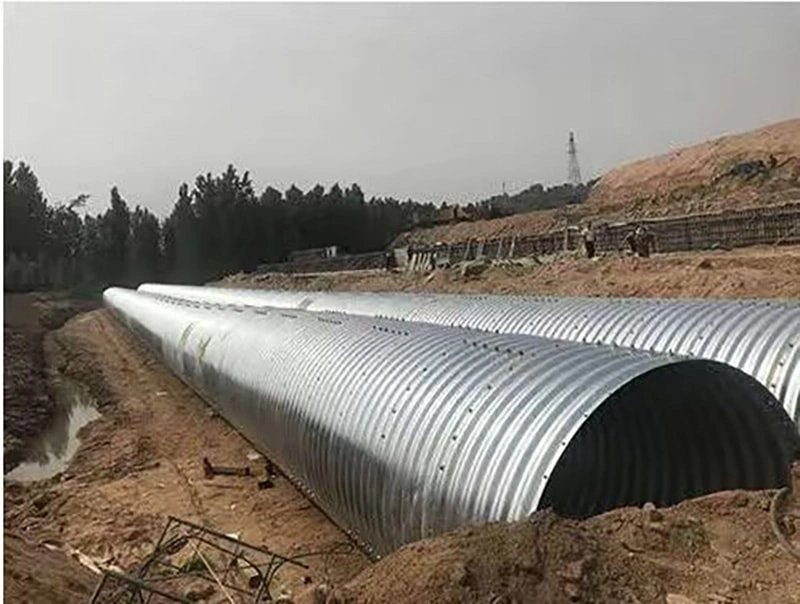
Positioning and Adjustment: Adjust the horizontal orientation and height of the culvert to ensure the accuracy of the culvert installation. 6. Fixation and Welding: Secure and weld the culvert using temporary supports and welding installation to ensure overall stability and sealing.
Trench Backfilling: After the culvert installation is completed, backfill the trench, ensuring the uniformity and compaction of the backfill material. The backfill on both sides of the pipe bottom can be compacted using vibrators, natural gravel, liquid powdered ash, lightweight concrete, or crushed stone.
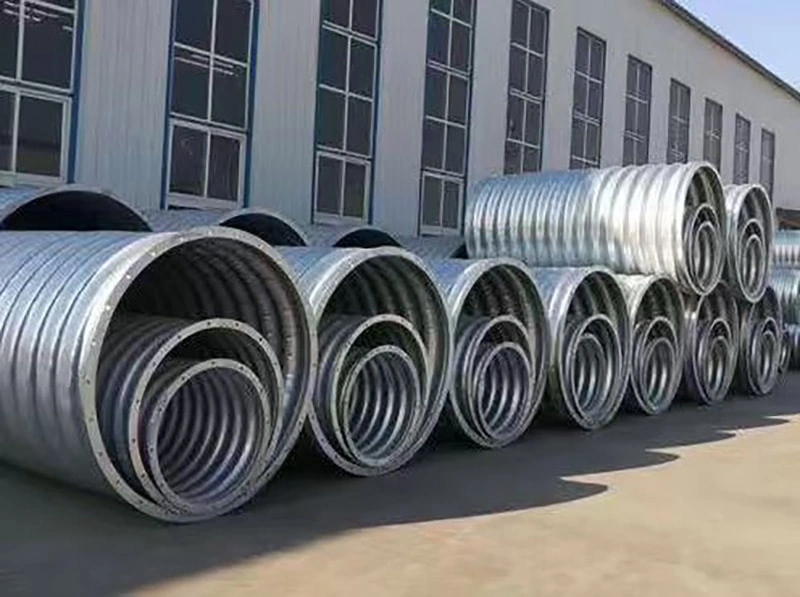
Standpipe Installation: According to the planning requirements, install the standpipe and venting to ensure pressure balance inside the conduit. 9. Construction Inspection: Conduct construction inspections to identify engineering quality issues.
